
How Chamber Music Improves Listening Skills and Makes You a Better Musician
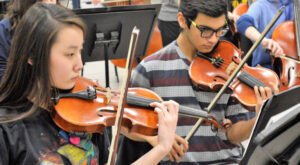 Many young musicians spend countless hours practicing scales, perfecting technique, and learning difficult repertoire. While these skills are essential, one ability often separates good musicians from outstanding performers:
Active listening
In chamber music, every musician has an important voice. No conductor is leading every entrance or controlling every tempo. Instead, students learn to communicate through listening, reacting, and performing together.
This is why chamber music is considered one of the best educational experiences for developing complete musicianship.
If you’re looking to become a stronger performer, prepare for youth orchestra auditions, or simply become a more confident musician, chamber music is one of the best places to start.
1. You Learn to Listen Beyond Your Own Instrument
In a large ensemble, it’s easy to focus only on your own part.
In chamber music, every instrument matters.
Students constantly learn to:
- Listen for melody and harmony
- Balance dynamics
- Match articulation
- Blend tone quality
- Adjust intonation
- Follow musical phrasing
Instead of thinking, “Did I play my notes correctly?” students begin asking:
- How does my part fit?
- Who has the melody?
- Should I play softer?
- How can I support the group?
These are the habits of advanced musicians.
2. Chamber Music Builds Musical Communication
Great chamber groups almost seem to “talk” through music.
Players communicate by:
- Eye contact
- Breathing together
- Body language
- Musical phrasing
- Shared interpretation
These non-verbal communication skills improve every ensemble experience—from school orchestra to honor orchestras and professional performances.
Students also become more confident leaders while learning when to support others.
3. Better Listening Creates Better Intonation
One of the fastest ways to improve intonation is by playing chamber music.
Students learn to:
- Tune chords
- Adjust pitch instantly
- Listen for harmonic balance
- Match neighboring instruments
Rather than relying only on electronic tuners, musicians develop their ears—one of the most valuable lifelong skills in music.
4. Every Student Becomes More Independent
Unlike large orchestras, chamber ensembles require every player to take responsibility.
Each musician must:
- Count confidently
- Know every entrance
- Understand the score
- Lead when appropriate
- Recover quickly from mistakes
This independence creates stronger performers who are ready for auditions, competitions, and advanced ensembles.
5. Chamber Music Improves Confidence
Many students discover they become far more confident after performing chamber music. Why?
Because every rehearsal gives them opportunities to:
- Share musical ideas
- Solve challenges together
- Perform exposed passages
- Develop leadership skills
- Trust their own musical instincts
Confidence developed in chamber ensembles carries into solo performances, school concerts, youth orchestras, and auditions.
6. Listening Skills Improve Faster Than Technical Skills Alone
Practicing alone improves technique.
Playing chamber music improves musicianship.
Students learn to:
- Hear musical structure
- Anticipate changes
- React instantly
- Stay flexible
- Create expressive performances
These listening habits often help students improve faster than practicing alone.
7. Chamber Music Makes Orchestra Playing Stronger
Many successful orchestra musicians began by studying chamber music.
Students who regularly participate in chamber ensembles often:
- Blend better
- Follow conductors more effectively
- Read music more confidently
- Play with greater expression
- Adapt quickly during rehearsals
These skills make them valuable members of any orchestra.
Looking Ahead: Fall Auditions Are Open!
As you keep your skills sharp over the summer, give yourself something exciting to look forward to. Auditions for the American Youth Chamber Orchestra’s Fall 2026 season are officially open!
If you are a young musician (ages 7–18) looking to develop your leadership skills, connect with world-class faculty, and explore the incredible depth of chamber and orchestral repertoire, we want to hear you play. Don’t wait until the end of summer to start prepping your audition pieces – use your relaxed summer schedule to polish your scales and solo works now.
Head over to our Chamber Music page to view the audition requirements for your instrument and secure your spot for the upcoming season.